Retro Vision: A Bold Slab Serif Font for Handmade Brands
If you've ever spent hours searching for that perfect vintage typeface—one that feels both timeless and punchy, legible at small sizes yet commanding on a farmhouse sign—then Retro Vision is the slab serif font your shop has been missing. As a maker who designs printable wall art, Cricut-ready SVGs, boutique product labels, and wedding stationery, I’ve tested dozens of “vintage” fonts only to find they crumble when cut at 0.5 inches or lose charm in sublimation transfers. Retro Vision doesn’t do that. It holds its shape, carries weight, and reads beautifully—whether laser-cut on wood, printed on kraft sticker paper, or heat-pressed onto a linen tote.
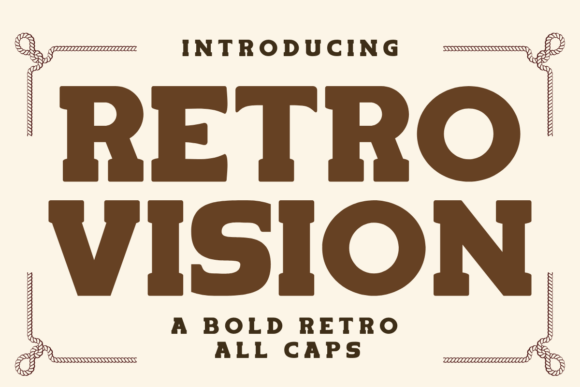
Visually, Retro Vision leans into mid-century American typography: thick, even strokes; squared-off serifs; generous x-height; and subtle warmth in its curves. It’s not overly ornate—no distracting swashes or exaggerated terminals—but it’s never sterile. There’s personality in its boldness, sincerity in its simplicity. That balance makes it ideal for physical products where clarity and character must coexist. Think of it as the dependable workhorse of your design toolkit—equally at home on a tiny candle jar label and a 24"x36" vintage poster for your Etsy shop banner.
Retro Vision shines brightest in display use: headlines, titles, signage, and short impactful phrases. It’s not built for long paragraphs—this is a display font, not body text—and that’s exactly why it works so well for crafters. Use it for the name on a baby onesie, the flavor name on a small-batch soap label, the “Welcome” on a rustic wedding welcome board, or the title line of a printable planner cover. Its strong letterforms survive tight spacing, curved surfaces (like mugs), and lower-resolution print methods without blurring or breaking up. I’ve used it successfully on 3/8"-tall vinyl stickers with zero readability issues—even on matte black backgrounds.
For Cricut and Silhouette users, Retro Vision cuts cleanly across all materials: vinyl, cardstock, iron-on, and stencil film. Because it avoids ultra-thin hairlines or delicate joins, it minimizes weeding time and reduces risk of tearing on intricate cuts. When prepping SVG quotes, I often convert Retro Vision to outlines first—its consistent stroke weight ensures smooth vector paths and crisp edges every time. And for sublimation projects? It prints with rich contrast on polyester blends and ceramic blanks, especially when paired with a light background or subtle distressed texture overlay.
Real-world uses I rely on weekly include:
- Candle & apothecary labels: “Lavender + Sage” or “Cozy Nights” in Retro Vision reads clearly at 12 pt on 1.5” round stickers.
- Farmhouse wall signs: Cut from 1/4” pine, painted white, then stained—Retro Vision’s sturdy shapes hold up beautifully to hand-distressing.
- Digital printables: Wedding welcome signs, printable birthday banners, and minimalist planner headers gain instant vintage credibility without looking dated.
- Boutique packaging: Embossed on kraft gift tags or foil-stamped on cotton drawstring bags—it adds tactile sophistication without extra cost.
- Holiday collections: “Merry & Bright”, “Gather ‘Round”, or “Joyful Season” feel warm and intentional—not generic—in Retro Vision.
Pairing Retro Vision thoughtfully elevates your entire brand identity. Try it with a relaxed handwritten font for greeting cards (e.g., “Handwritten Joy” for the message inside, Retro Vision for the front title). For clean, modern contrast, pair it with a neutral sans serif like Montserrat or Inter—ideal for product descriptions beneath a bold Retro Vision header on a Shopify product page. Avoid pairing it with other heavy slab serifs or overly decorative scripts; its strength lies in confident simplicity, so let it anchor the composition while supporting fonts add nuance.
Retro Vision includes standard OpenType features—basic ligatures, stylistic alternates, and extended Latin character support—so it handles common accents and diacritical marks found in names like “José”, “Naïve”, or “Café”. It’s delivered in OTF and TTF formats, fully compatible with Cricut Design Space, Silhouette Studio, Adobe Creative Cloud, Canva, and Affinity apps. No web font files are included, but that’s rarely needed for physical product creators—what matters is reliable desktop performance and seamless cutting/printing workflows.
A quick but essential note on licensing: Retro Vision is a commercial font, meaning you’re fully cleared to use it in products you sell—physical items (mugs, shirts, stickers), digital downloads (printables, SVG bundles, Canva templates), client work, and even merchandise for your own brand. Just be sure your license covers *commercial use*—not all free or discounted fonts do. When in doubt, check the license terms before uploading your next Etsy listing or launching a new product line.
What sets Retro Vision apart isn’t just how it looks—it’s how it *performs*. In a market flooded with nostalgic fonts that sacrifice function for flair, this one delivers both. It helps your handmade goods look professionally designed without demanding professional-level typography skills. Your customers notice the difference: cleaner labels feel more trustworthy, bolder signage commands attention, and consistent use across your shop builds recognition—slowly, authentically, and without shouting.
Whether you're designing your first Etsy collection or scaling a full product line, Retro Vision earns its place in your core font library. It’s not just another pretty typeface—it’s a practical, production-ready tool that supports your craft, strengthens your brand voice, and quietly lifts the perceived quality of everything it touches.