Ravente Serif Font for Handmade Labels & Printables
As a maker who’s spent years designing candle labels, wedding invites, and printable planner pages, I know how much a single font can shape how customers see your work. Ravente isn’t just another retro serif font—it’s the kind of typeface that makes your product feel intentional, elevated, and quietly confident. It walks that fine line between nostalgic warmth and clean modern usability—no small feat when you’re cutting vinyl for boutique tags or prepping files for Etsy digital downloads.
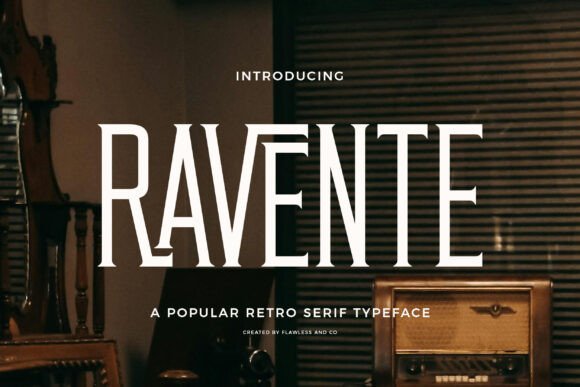
Ravente’s bold serifs and smooth curves give it presence without shouting. The letterforms are balanced and generous—not too condensed, not overly airy—so it reads beautifully at 12 pt on a kraft paper gift tag *and* commands attention at 120 pt on a farmhouse-style wall sign. That versatility is why I reach for Ravente first when designing physical products: it holds up in real-world use, whether printed on matte sticker stock, engraved onto wood, or heat-pressed onto linen tote bags.
For handmade sellers, readability isn’t optional—it’s essential. I’ve tested Ravente on Cricut Explore Air 2 and Silhouette Cameo 4, and it cuts cleanly even at 8–10 mm height, thanks to its open counters and consistent stroke weight. No fragile terminals or over-fussy details to snag during weeding. On product labels—especially for candles, soaps, or small-batch preserves—Ravente adds sophistication without sacrificing clarity. Customers don’t squint at “Lavender & Sage” in Ravente; they pause, appreciate the craftsmanship, and remember your brand.
Wedding stationery is where Ravente truly shines. Its elegance feels timeless, not dated—perfect for welcome signs, menu cards, or foil-stamped save-the-dates. Unlike some vintage fonts that lean too theatrical or stiff, Ravente keeps things grounded. Try it for names on place cards: “Emma & James” looks warm and personal, never costume-y. And because the letter spacing is naturally generous, you won’t need to manually kern every line—a real time-saver when producing 50+ invitation suites.
Seasonal and holiday designs benefit from Ravente’s quiet charm, too. Think “Hand-Poured • Small Batch • Made with Care” on Christmas candle jars, or “Spring Market • April 12–14” on burlap market banners. It avoids cliché while still feeling festive—no snowflakes or holly motifs needed. For Easter egg labels or summer farmers’ market tags, Ravente brings gentle authority without competing with hand-drawn illustrations or botanical motifs.
Ravente works especially well as a display font—ideal for titles, headers, and short phrases—but isn’t built for long paragraphs. Use it for headings on printable wall art (“Gather • Grow • Give”), shop signage (“The Honeycomb Co.”), or SVG-based t-shirt designs (“Brewed With Love”). For body text in digital printables—like planner pages or journal prompts—I pair it with a clean sans serif (think Montserrat or Inter) or a relaxed handwritten font for contrast. That pairing creates visual rhythm: Ravente sets the tone, and the secondary font carries the message.
Font pairing matters most when building cohesive brand assets. If you sell floral-themed digital downloads, try Ravente for section headers paired with a delicate script for accents (“hand-tied bouquet” in a light script, “Wildflower Collection” in bold Ravente). For rustic bakery labels, combine it with a sturdy geometric sans for ingredient lists. The key is contrast in personality—not weight alone. Ravente’s retro-modern balance makes it flexible enough to anchor both minimalist and layered layouts.
Check what’s included before purchasing: Ravente offers multiple weights (Light, Regular, Bold), true italics, and standard OpenType features like ligatures and stylistic alternates. These aren’t just flourishes—they help avoid awkward letter collisions (like “f” + “i” or “f” + “l”) in cut-file designs and improve flow in printed invitations. Multilingual support covers Western European languages, which matters if you sell internationally or design bilingual baby shower invites.
File formats matter practically, too. You’ll get OTF and TTF files—both widely supported by design apps (Canva, Affinity Designer, Adobe Suite) and cutting machines. No need to convert or risk rendering issues. And crucially: Ravente includes a commercial license. That means you can use it confidently on physical products you sell (mugs, shirts, stickers), in templates you license on Etsy, in SVG files for crafters, and in client branding projects—no extra fees or attribution required.
I keep Ravente in my go-to folder for projects where quality perception hinges on subtle details: the serif weight on a boutique soap label, the curve of the “g” on a birthday card, the way “Est. 2021” sits beside a logo on packaging. It doesn’t scream “look at me”—it whispers “this was made with care.” And in a crowded handmade marketplace, that quiet confidence is exactly what helps your products stand out, get remembered, and earn repeat buyers.
Whether you're printing 100 wedding napkin wraps or uploading your tenth Canva template pack, Ravente delivers consistent performance and emotional resonance. It’s not flashy—but then, the best tools rarely are. It’s reliable, beautiful, and built for making things people love to hold, display, and share.